Why First English Day Starts With One Sentence
The practice thesis behind a low-friction listening flow for parent-led English practice.
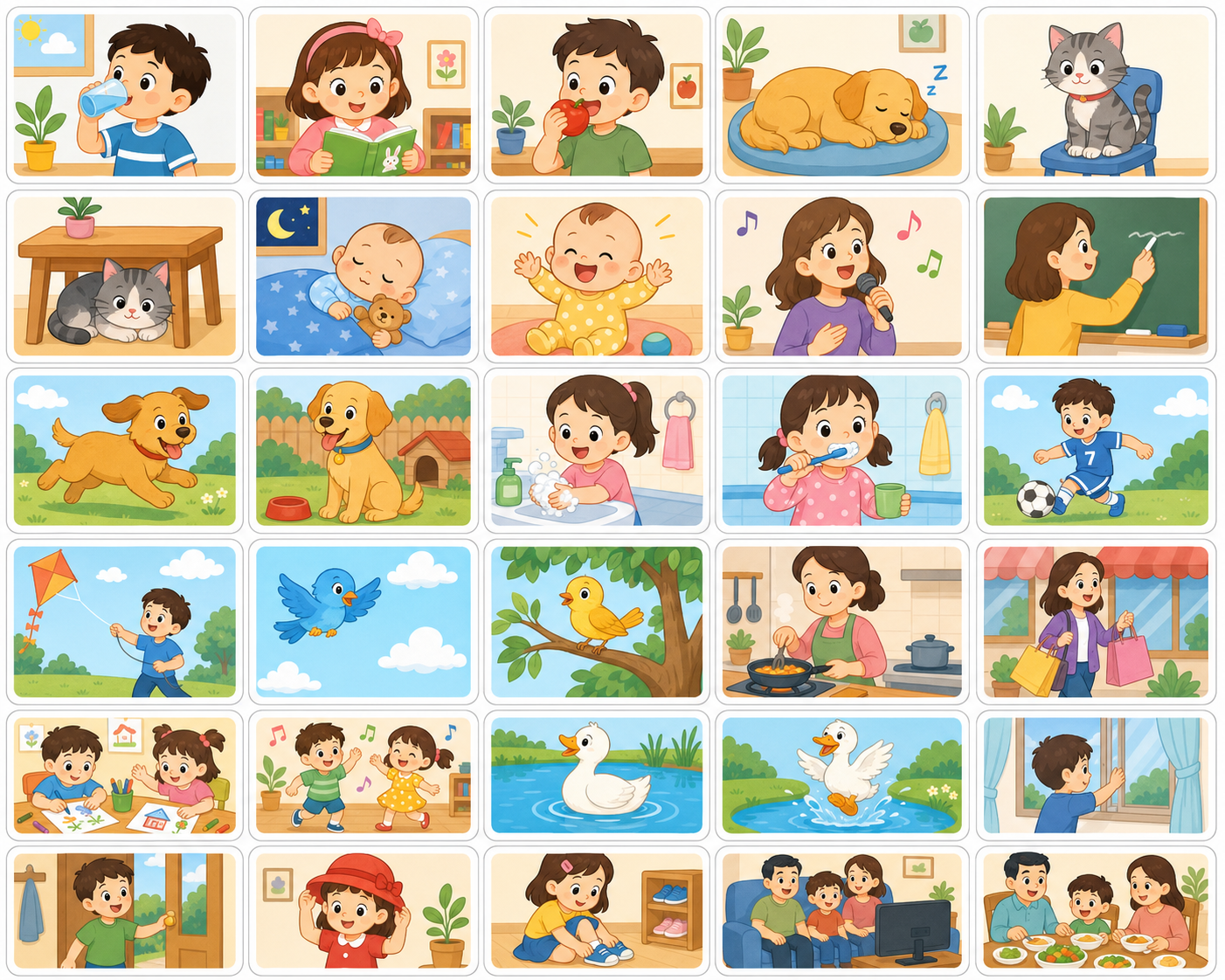
First English Day is intentionally narrow in its first public practice. The goal is not to look like a complete course platform on day one. The goal is to help a young child hear one sentence, match it to one picture, and stay in the practice moment before attention leaks away.
The real first problem
The first problem is not that parents need another English app. The first problem is that practice often starts too late.
A parent opens a tool, searches for the right entry, moves through badges or menus, and rescues the session while the child waits. By the time the first listening prompt arrives, the child may already be out of the practice moment.
First English Day starts from a smaller promise:
- Open the page.
- Hear one short English sentence.
- Pick the matching picture.
- Continue only while the child is still with the activity.
Simple should still feel serious
Low friction cannot mean random practice. Parents still need to see that the practice has a learning shape.
That is why the starter practice is organized by days and focus areas. A child sees only the next tiny action. A parent can still understand where the session fits inside a repeatable practice rhythm.
What we are validating first
The early question is behavioral, not architectural:
- Did the child reach the first listening prompt quickly?
- Where did attention break?
- Did the parent trust the lesson structure enough to come back tomorrow?
Accounts, parent progress views, payments, and larger content systems can wait until families repeatedly return. The first release should earn that complexity with real family practice signals.